
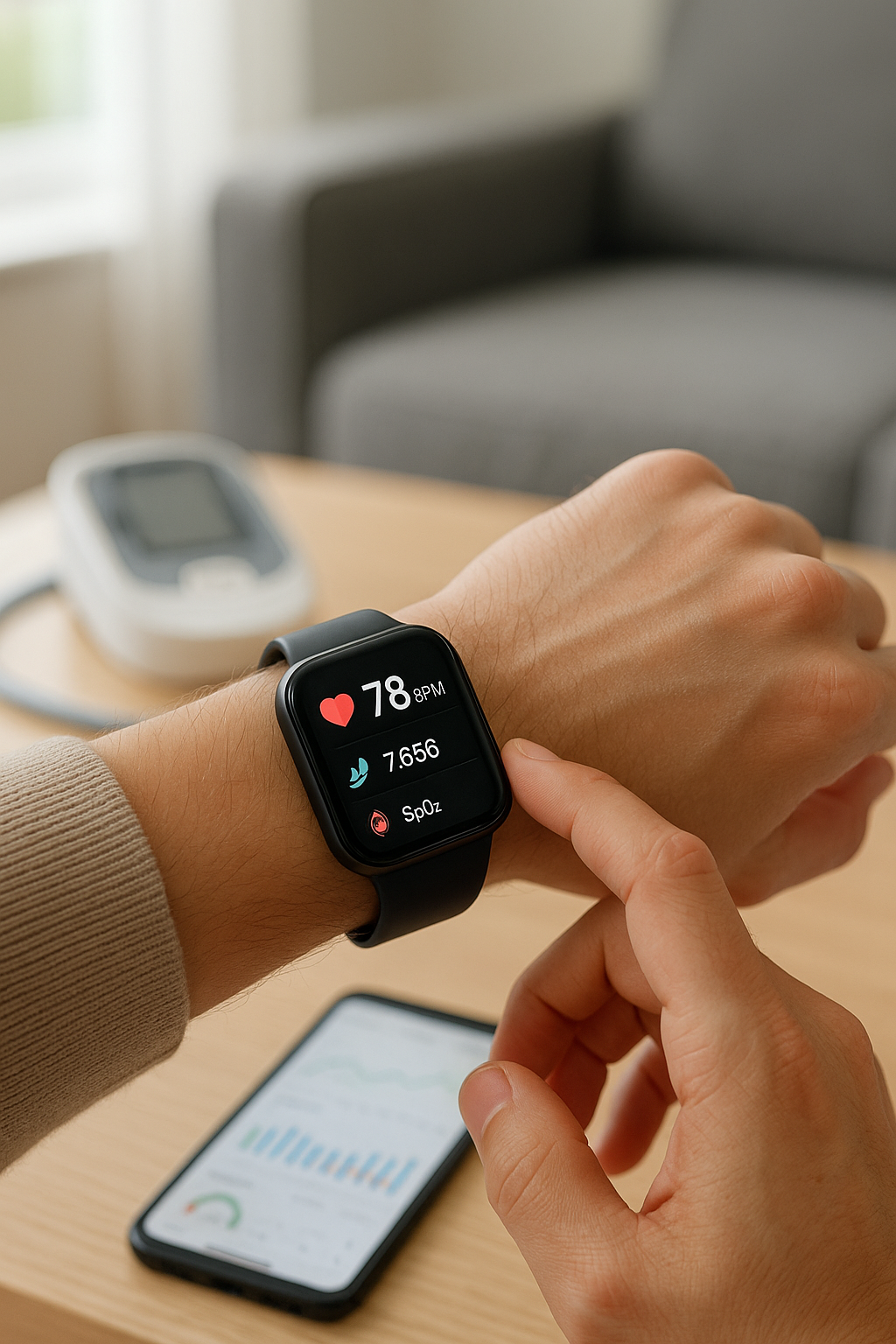
How Accurate Are Smartwatches for Health Tracking? Real-Life Analysis
Smartwatches have evolved from simple notification tools into powerful health and fitness companions. From tracking heart rate and steps to monitoring sleep and blood oxygen levels, they promise to give you a complete picture of your daily health.
But there’s one big question everyone asks:
How accurate are smartwatches for health tracking in real life?
In this article, we’ll break down the most common health features, what the data really means, how accurate it usually is, and when you should still rely on professional medical devices or a doctor.
Why Smartwatch Health Tracking Became So Popular
Health awareness has grown massively in recent years. People want to move more, sleep better and understand what’s happening inside their bodies. Smartwatches became popular because they:
-
Stay on your wrist all day, so data collection is effortless
-
Give instant feedback during workouts or daily activities
-
Store history so you can see trends over days, weeks and months
-
Motivate you with goals, reminders and achievements
This combination of convenience and data is powerful. But convenience does not always equal clinical accuracy — and that’s where expectations need to be realistic.
Heart Rate Tracking – Surprisingly Good (with Limits)
Most smartwatches use optical heart rate sensors (PPG). They shine light into your skin and measure changes in blood flow to estimate your heart rate.
In real life, heart rate tracking is usually:
-
Quite accurate during light to moderate activity
-
Walking, working at a desk, light jogging or general daily movement
-
Many watches stay within roughly 3–8 beats per minute (BPM) of a chest strap or professional device in these conditions
-
-
Less accurate during intense or very dynamic activity
-
Fast running, HIIT workouts, heavy weight training
-
Rapid arm movement, loose straps or heavy sweating can cause signal noise and sudden spikes or drops in reading
-
What this means for you:
-
For everyday users who want to monitor general heart rate trends, resting heart rate and basic workout intensity, a good smartwatch is usually accurate enough.
-
For serious athletes, patients with heart conditions or anyone needing very precise data, a chest strap or medical-grade device is more reliable.
Use your smartwatch heart rate data as a strong indicator, not as a final diagnostic result.
SpO₂ (Blood Oxygen) – Helpful Indicator, Not a Medical Device
Blood oxygen level (SpO₂) monitoring became popular during and after the pandemic. Many smartwatches can now measure SpO₂ from the wrist.
How it works in practice:
-
When you are sitting still, wearing the watch properly and measuring a few times, the SpO₂ reading can be close to a fingertip pulse oximeter.
-
However, readings can vary due to:
-
Movement
-
Skin tone and thickness
-
How tight or loose the watch is
-
Ambient light and sensor quality
-
Important reality check:
-
A smartwatch is not a replacement for a medical pulse oximeter or clinical equipment.
-
If you have lung, heart or serious health issues, you must not rely solely on smartwatch SpO₂ to make medical decisions.
Use SpO₂ data as a trend tool – to see whether your readings are generally stable or changing over time – but consult a doctor for anything critical.
Sleep Tracking – Great for Patterns, Not Perfect Science
Sleep tracking is one of the most loved features. Watches claim to show light sleep, deep sleep, REM sleep and awake time.
In reality, smartwatches typically combine movement data (actigraphy) and heart rate patterns to estimate your sleep stages. They are making an educated guess based on algorithms, not performing a full medical sleep study.
What smartwatches usually do well:
-
Estimate total sleep duration (when you fell asleep and woke up)
-
Show how many times you woke up at night
-
Indicate rough patterns over days and weeks
What they are less accurate at:
-
Precisely separating light vs deep vs REM sleep
-
Matching the accuracy of clinical sleep studies (polysomnography)
How to use sleep data effectively:
-
Focus on overall trends, not exact minute-by-minute sleep stages.
-
Ask: Am I generally sleeping more or less this week? Am I waking up often?
-
Track the impact of lifestyle changes (less caffeine, earlier bedtime, less screen time) on your sleep pattern over time.
Smartwatch sleep tracking is best treated as a helpful guide, not a perfect medical report.
Step Count & Calorie Burn – Good for Activity Level, Not Exact Numbers
Step Count:
Most smartwatches do a decent job counting steps throughout the day.
-
Walking, shopping, office movement – generally tracked fairly accurately
-
But issues can occur when:
-
Your arm doesn’t move much (e.g., pushing a trolley, carrying something)
-
Vibrations from vehicles or machines are misread as steps
-
Calorie Tracking:
Calories burned are calculated using:
-
Age, height, weight, gender
-
Heart rate
-
Movement level and duration
This is always an estimate, not an exact measurement. Calorie burn can vary from person to person even if their smartwatch shows similar numbers.
How to use this data:
-
Treat steps and calories as a relative comparison tool.
-
“I moved more today than yesterday.”
-
“On workout days, I burn significantly more than on rest days.”
-
-
Set realistic daily step goals (e.g., 8,000–10,000 steps) and try to be consistent rather than obsessing over every single number.
Blood Pressure, ECG & Stress – Extra Features, Extra Caution
Some advanced smartwatches provide additional health features like blood pressure, ECG (electrocardiogram) and stress tracking. These sound impressive, but they must be understood correctly.
Blood Pressure:
-
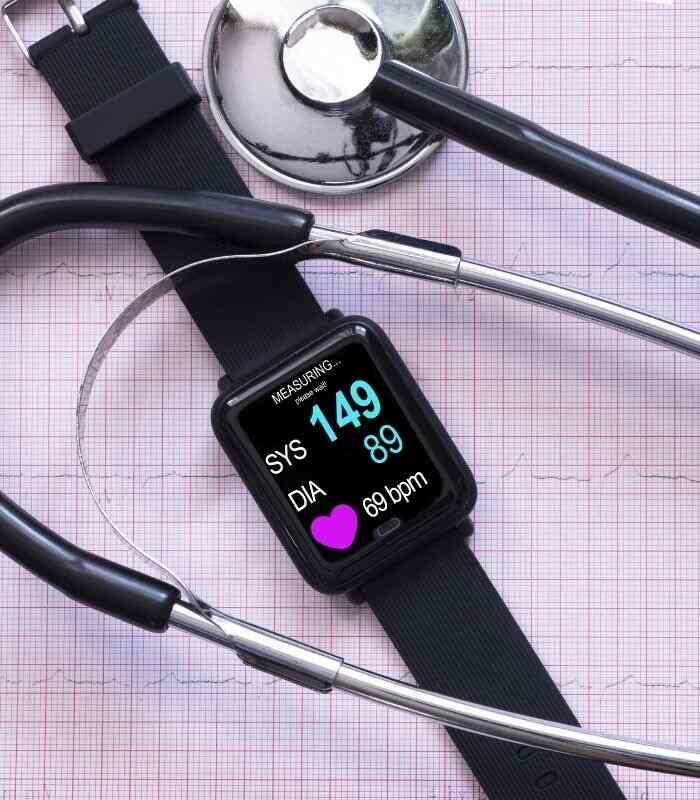
Wrist-based optical sensors are not as accurate as traditional arm cuff blood pressure monitors.
-
They may give a rough estimate, but readings can be inconsistent.
-
Hypertension or heart patients should always rely on clinical devices and doctor’s advice.
ECG:
-
Some branded watches offer single-lead ECG readings.
-
These can help detect irregular rhythm patterns but are not a full replacement for hospital-grade multi-lead ECG tests.
Stress Monitoring:
-
Stress scores are usually based on heart rate variability (HRV) plus algorithms.
-
They can give a general sense of when your body is more “tense” or “relaxed,” but cannot read your emotions or mental health perfectly.
Always treat these features as supportive insights, not final medical tools.
How to Get the Most Accurate Data from Your Smartwatch
You can improve the quality of your health data with a few simple habits:
-
Wear the watch correctly – snug but comfortable, not too loose
-
Keep the sensor area and your skin clean and dry
-
Use the non-dominant hand (often gives more stable readings)
-
Avoid constantly checking during heavy movement where readings are unstable
-
Measure key metrics (like resting heart rate or SpO₂) under similar conditions – for example, every morning at the same time while sitting still
Remember: consistency is more important than perfection. Trends over time are usually more meaningful than any single reading.
So, Can You Trust Smartwatch Health Tracking?
Yes, you can trust smartwatches for everyday health awareness and lifestyle tracking, as long as you understand their limits.
Smartwatches are:
-
Very useful for:
-
Tracking daily movement and steps
-
Monitoring basic heart rate trends
-
Observing general sleep patterns
-
Staying motivated to move more and live healthier
-
-
Not suitable for:
-
Making serious medical decisions on their own
-
Replacing doctors, clinical tests or prescription advice
-
Managing high-risk medical conditions without professional supervision
-
Think of your smartwatch as a smart health companion, not a doctor. It helps you stay conscious, active and informed – but it should work alongside proper medical guidance, not instead of it.
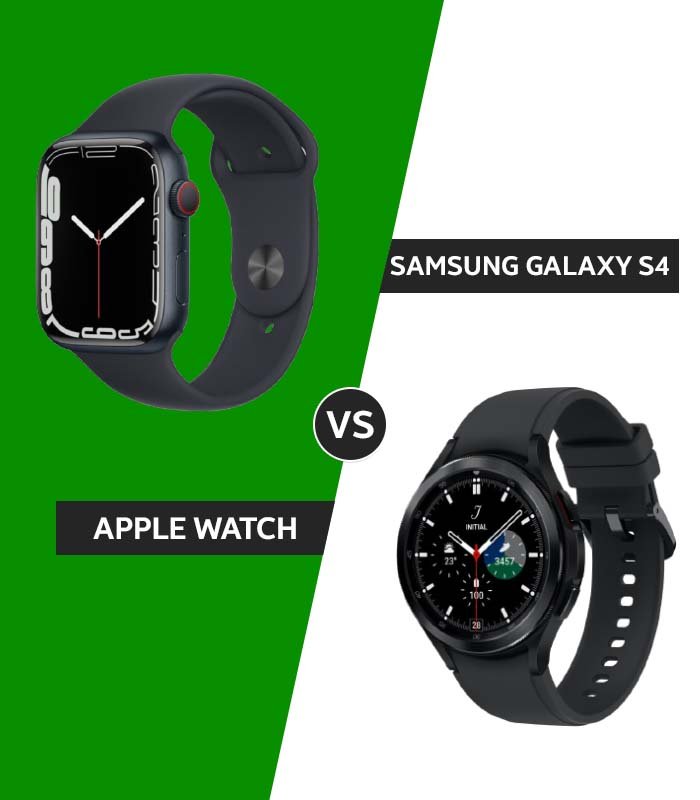
And when you’re ready to choose a smartwatch that balances style, features and reliable health tracking, make sure to compare models carefully and pick a device from a trusted store like Tech Den, so you get the right match for your lifestyle and long-term health goals.


![How to Change Time on Fossil Smart Watch [A GUIDE]](https://techdenbd.com/backend/img/blog/how-to-change-time-on-fossil-smartwatch-2022-06-29-62bbdf51aaea7.jpg)